Parking can seem straightforward until a neighbor complains, a visitor receives a warning, or a tow truck arrives. HOA parking rules exist to keep streets clear, protect access for emergency vehicles, and reduce daily friction. A little clarity now can save a lot of stress later.
HOA Parking Rules Basics

Most communities run on written documents, and HOA parking rules are usually part of that system. Some rules are in the CC&Rs, some are in separate “rules and regulations,” and others appear as board resolutions. Either way, the goal is the same: predictable parking that works for as many residents as possible.
A helpful starting point is understanding the difference between “common area” and “exclusive use” spaces. A driveway might be yours to use, while the curb in front of your home may be association-controlled or city property with HOA restrictions layered on top. That detail changes how strict the rules can be, and how they get enforced.
Many boards also update parking policies over time. New signs, permit programs, guest passes, and painted curbs often follow repeated problems, not appear out of nowhere.
Parking Zones That Usually Apply
Every property looks a little different, but most communities treat parking as a set of zones. HOA parking rules often specify what counts as resident parking, guest parking, loading areas, and no-parking zones.
Garages and driveways are usually the first choice for resident vehicles. Street parking may be allowed, limited, or banned depending on road width, traffic flow, and fire access. In many places, “first-come, first served” guest spaces are meant for short visits, not daily overflow.
A quick scan of community signage can reveal the policy’s intent. Painted curbs, stall numbers, and posted time limits tend to match what’s in the written rules.
Common parking categories you may see include:
- Assigned spaces tied to a unit
- Unassigned spaces open to residents
- Guest-only spaces with time limits
- Fire lanes, hydrant zones, and corners marked for visibility
- Loading areas meant for quick unloading
Some associations also use a permit or decal system to track who belongs where. That’s common with condos, tight townhome streets, and communities with limited parking. In those setups, even basic HOA car parking expectations can feel strict because there’s less room for mistakes.
Guest Parking and Time Limits

Guest parking is where many conflicts begin. Friends stop by, family stays over, and suddenly “guest” turns into “extra resident vehicle” in the eyes of enforcement. Most communities try to draw a line with time limits, pass requirements, or designated visitor rows.
Overnight rules are especially common. A community may allow street parking during the day but restrict it at night to keep lanes open and stop long-term storage on the curb. In some neighborhoods, the same rule exists simply because residents complained about crowded streets.
Visitor passes can help, but only if they’re used properly. A pass left on the dashboard every night might appear to be a loophole, and those patterns are noticed.
Before inviting guests to stay longer, a quick check of the policy can prevent awkward surprises. A temporary pass, a reserved guest stall, or a heads-up to management often solves the issue without drama.
Commercial Vehicles and Oversized Rigs
Work trucks, vans with signage, trailers, RVs, and boats tend to trigger more restrictions than a regular sedan. A board may worry about sight lines, noise, leaks, or simple space limits. Some communities also want to avoid a “fleet lot” look in residential areas.
Commercial vehicle rules vary a lot, so the definition matters. In one community, a pickup truck is fine. In another case, a pickup with ladder racks is considered commercial and must be parked in a garage or off-site. The same kind of split shows up with wrapped vehicles, branded doors, and oversized vans.
Trailer storage is another common flashpoint. A trailer can obstruct sightlines at corners, occupy guest stalls, and impede access for emergency vehicles. That’s why many HOA parking rules ban trailers in open parking areas, even when the trailer belongs to a resident.
If a larger vehicle is part of daily life, the best approach is to learn the rule’s exact wording and then ask about options. Some associations allow short loading windows, weekend allowances, or designated overflow areas.
Towing and Fines: What to Expect

Enforcement sounds harsh, but most communities rely on a gradual process. A warning may be issued first, followed by a notice of violation, then a fine schedule if the issue continues. Towing usually occurs at the far end of the ladder, but it can be faster in fire lanes, when driveways are blocked, or when parking in a clearly marked “no tow” zone.
The biggest mistake is assuming towing works the same everywhere. State and local laws often affect signage, notice requirements, and towing company operations. Many associations also have internal steps they must follow before a tow can be ordered, especially for residents.
A resident-friendly way to think about it is: enforcement should be predictable. A reasonable policy explains what will happen, when it will happen, and how residents can respond.
Key details worth checking in your own documents include:
- Whether a warning is required before fines or towing
- How notices are delivered and how long you have to respond
- What counts as “repeat” violations
- Whether hearings or appeals are offered
- Which areas are “tow away” by default, like fire lanes
If a tow happens, paperwork matters. Photos, timestamps, and a copy of the posted rule can clarify whether the policy was applied correctly. That record also helps if a dispute needs to be reviewed.
Accessibility and Fair Use
Parking policies must work in real life, not just in ideal situations. Accessibility needs are a major example. A resident with a disability may request a closer space, a wider access aisle, or a reserved spot near an entrance. In many cases, those requests are handled through a reasonable accommodation process.
Some communities already have designated accessible spaces near common facilities such as clubhouses and pools. Others may need to create a solution when a need is documented. Even when the board wants to help, the process may require forms, supporting documentation, and a written decision to ensure consistency.
Fair use also applies in simpler cases. Guest stalls should not be treated as private overflow by a few units, and residents should not be denied parking intended for them. A good policy aims to prevent any household from taking more than its share.
When accessibility or fairness comes up, a calm tone goes a long way. Parking issues feel personal, but a solution is more likely when the focus stays on the rule and the practical fix.
When a Dispute Pops Up
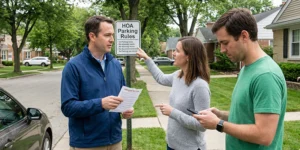
Parking disputes rarely start with the rule itself. Most begin with a misunderstanding, a neighbor-to-neighbor complaint, or unclear enforcement. A clean approach is usually the most effective one.
Documentation helps without escalating things. A photo of the sign, a copy of the notice, and a brief note on the dates can keep the discussion factual. That also protects you if the issue drags on.
Communication should stay direct and boring. A short email asking what section of the policy applies and what step comes next often gets better results than a long message that reads like a debate. If the rule is unclear, a request for clarification can be made without being unfair to anyone.
Sometimes, an exception is possible. A temporary medical need, a moving truck, a visiting caregiver, or home repairs can create legitimate short-term parking pressure. In many communities, a written request submitted early is more likely to be received than an apology after enforcement begins.
Simple Habits That Help
Daily habits can prevent most parking headaches. Small choices add up in communities where space is limited, and frustration spreads fast.
A few practices that tend to keep things smooth:
- Keeping driveways clear of sidewalk blockages
- Using garages for vehicles instead of storage when possible
- Moving guest cars before time limits hit
- Avoiding corners and hydrant areas, even “just for a minute.”
- Checking for temporary rules during events, resurfacing, or painting
A little awareness also protects your visitors. Guests usually assume curb parking is fine unless told otherwise, so a quick heads-up can spare them an expensive lesson.
Most of all, consistency matters. When residents treat HOA parking rules as the shared baseline instead of a suggestion, the community feels calmer. That benefit shows up in fewer confrontations, fewer tickets, and fewer angry notes on windshields.
Parking Peace
Less tension usually comes from simple clarity and steady routines, not from winning arguments. HOA parking rules can feel strict, yet they’re often the reason streets stay passable, and neighbors stay civil. With a little prep and the right questions, parking becomes one less thing to worry about.
Related Articles: